Showing posts with label olympic weightlifting. Show all posts

Thursday, November 20, 2014

Mental Toughness in Weightlifting

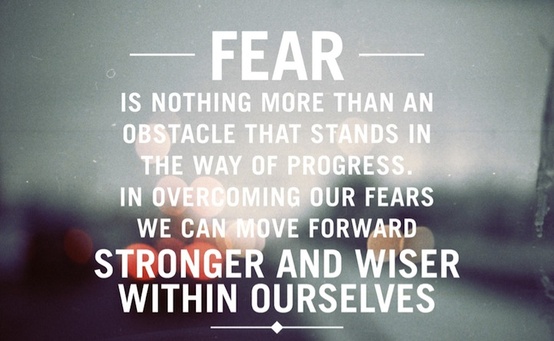
Mental toughness is a must to be successful in Olympic Weightlifting. If you let fear seep into your mind before you lift that barbell there is a 99% chance you will miss it. A weak mental game causes injuries and “kills more dreams than failure ever will.” (Suzy Kassem)
Honestly if you want to succeed in the sport of weightlifting, resilience (mental strength in any situation) is a must. Accidents happen, but if you are prepared for them they can’t shake you. What if you forget your lifting shoes? What if the competition doesn’t have chalk? 

Here are some things to do periodically (but not too often) to keep your mental game in check:

  • Lift in regular tennis shoes
  • Train without any chalk
  • Turn the music off
  • Vary your rest times (in a competition who knows how long you’ll be waiting?)
  • Lift at different times of day
  • Train with distractions (like noisy football players)
  • Share a platform with different people
  • Know yourself

Learning to lift without your weightlifting shoes or buckets of chalk, and knowing how your body is going to react will prepare you for the obstacles you may encounter in your weightlifting career. Avoid failure by setting yourself up for success.
Kahi 160kg snatch in sandals

Monday, June 30, 2014

How much should you train?

Having an all or nothing attitude is good in many ways; it is a sign of dedication and determination, but if not balanced properly it can lead to a complete burn out. I was under the notion that giving 110% to your goals and doing everything possible to make them come true was the absolute way to go, but I was bewildered when my coach told me to “get a life.” He didn’t mean it in a mean way at all. What he was saying is that having a life outside of the gym, like another hobby or group of friends can be a good thing! It may not seem like it is contributing towards the goal, but it is considered recovery; mental recovery from stressing and fretting about all the work it will take to reach your goal.
“Feeling that you are solely defined by your job — even if it is going well — can raise your chances of experiencing anxiety, depression and burnout, because you don’t have a perception of yourself outside of work.” -psychotherapist Michelle Maidenberg

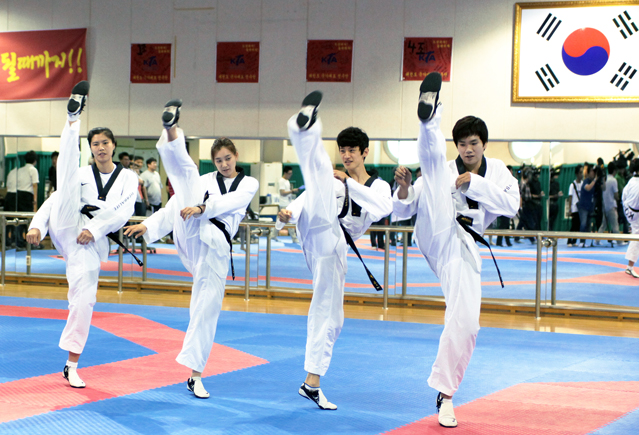
Martial arts and mind games like chess
 are great hobbies for a sharper mind.
It also activates different parts of the brain and helps strengthen the mind. According to Dr. S. Ausim Azizi, chairman of the department of neurology at Temple University’s School of Medicine, having a hobby activates an area of the brain called the nucleus accumbens that controls how we feel about life and also stimulates the brain’s septal zone which can give you feelings of happiness. Believe it or not hobbies can even enhance your creativity, help you think clearly, and sharpen your focus (Zimmerman). Being able to focus and to think clearly are both very helpful in the sport of weightlifting. Hobbies also develop new territory in your brain. Any new challenge you undertake will create new associations and force your brain to accommodate new information and new routines (Michalowicz).

It’s also good to remember that life goes by quickly and every moment we have will pass so we better make the best of them by exposing ourselves to diversity and taking it all in. A wise crossfitter at my gym once told me not to rush life, because you can never get it back. It could go both ways, I most likely won’t ever have another opportunity to lift weights full time and live in a house free of rent with parents paying the grocery bills. But then again I will never have the chance to be 15 again and go to dances and football games with my friends. I guess it’s just a question of, how much do you want it? How much are you willing to devote to your dream? and is is worth it? Then there is the argument that in order to be successful a person must have balance in their life, but when you ask an olympic athlete how they divide their time I’m guessing the majority of it is either spent in the gym or recovering.

Sometimes better judgement outweighs the equation, hard work = success. Some people need a hobby or a sport outside of their main obsession, while others struggle with not devoting enough time to their obsession. Some athletes thrive training 10x a week, while others perform best training only 4x a week.

Let me tell you about the Russians. The junior Russian weightlifters do almost nothing but eat, sleep, and train. Literally. Their life revolves around it and they are known as some of the best lifters in the world. Their day starts with eating a lot of food and taking a nap to get fueled up for lifting, then they receive personal massages before starting their warm-up. After warming up they train, then more massages; and the cycle begins again with eating accompanied by another nap. They do this 5 days a week, with Thursday and Sunday as rest days (Youtube). On the other hand Zoe Smith, an Olympic competitor and Commonwealth games medalist at the age of 16, says she can only stand to be in the gym once a day (Zoe). In one interview with the young champion it says she is “like any other teenager, she loves seeing her friends, spending time on the internet, and listening to music.” (Shah) Another young lifter from Great Britain, Rebekah Tiler only trains for two hours a day four times a week (Tiler). At only 15 Tiler is the youngest ever European and British Champion, and an Olympic hopeful. She snatches 200 pounds and clean & jerks 253 pounds weighing less than 151 pounds (McDaid).

Personally I’ve tried training twice a day and I loved it, but my body didn’t. I’ve shaved my gym sessions down to only 5x a week and sometimes even less because I’m not recovering enough and it’s just not working for me. Also I am only about a year into my weightlifting journey, so training twice a day isn’t the most realistic option. More isn’t always better. That’s been a tough lesson for me to learn. For now I am experimenting with “getting a life” and finding a hobby outside of the gym instead of letting my life revolve only around weightlifting. Hopefully this will benefit my lifting and my outlook on life.


What I realize after writing this is that different things work for different people. How much you train and recover depends on your individual situation and your goals. So find out what works for you and stick to it.


Sources:

McDaid, David. "Tiler Wins Senior Women's Title at 15." BBC Sport. N.p., n.d. Web. 30 June 2014.

Michalowicz, Mike. "9 Ways to Instantly Strengthen Your Brain." OPEN Forum. N.p., n.d. Web. 30 June 2014.

"One Day the Men's JUNIOR's National Team Russia (edition-1)." YouTube. YouTube, n.d. Web. 30 June 2014.

Shah, Sonali. "Commonwealth Games 2010: What Makes Zoe Smith Special?" BBC News. BBC, 10 June 2010. Web. 30 June 2014.

Smith, Chad. "4 Ways To Make Any Program Work - Juggernaut Training Systems." Juggernaut Training Systems RSS. N.p., n.d. Web. 30 June 2014.

Tiler, Rebekah. "Rebekah Tiler." Sportsaid.org.uk. N.p., n.d. Web.

"The Weightlifters,Russian Junior Team Documentary (English Subtitles)." YouTube. YouTube, n.d. Web. 30 June 2014.

Zimmerman, Eilene. "Hobbies Are Rich In Psychic Rewards." The New York Times. The New York Times, 01 Dec. 2007. Web. 30 June 2014.

"Zoe Smith In Person The Weightlifting World Podcast." YouTube. YouTube, n.d. Web. 30 June 2014.


Preferences
Preferences
Preferences
§
1
2
3
4
5
6
7
8
9
0
-
=
Backspace
Tab
q
w
e
r
t
y
u
i
o
p
[
]
Return
capslock
a
s
d
f
g
h
j
k
l
;
'
\
shift
`
z
x
c
v
b
n
m
,
.
/
shift
English
alt
alt
Preferences

Wednesday, April 9, 2014

Training with a Broken Wrist

It has sparkles too✨ 

  I injured my wrist the week before Junior Nationals doing a max effort clean. Immediately I knew something was wrong and I worried that I wouldn’t be healed in time to compete. I downplayed the pain and pushed through training. Junior Nationals came and I bombed out. A month later, after two x-rays, an ultrasound, and an MRI they finally put me in a cast for six weeks.


Did I stop training? Heck no. Each injury is an opportunity to kill a weakness. My biggest weakness is front squats. I can’t really do front squats with a cast, but I sure can do some other terrible form of them (zombie squats). My coach put me on a crazy program where you basically try to max out every day (every three weeks is a recovery week). I’ve had time to focus on the importance of breathing properly and I believe that this has made all the difference for me. I was complaining that I hadn’t maxed out on my back squat for 6 months, but last week I put 20 lbs on my back squat and 15 lbs on my zombie squat.


Squats cover lower body strength, now what about maintaining upper body strength? I found some painless exercises for my shoulders/upper back and I’ve added them into my daily regimen. Basically you lay on the floor and squeeze your shoulder blades then bring your arms off the floor. I do 20 reps in each position: T, W, and Y (literally you just shape your arms like the letters). Of course now I also have all the time in the world for core and mobility. I have a 30 minute mobility/warm-up routine. Three minutes of each exercise on both sides: quad floss, hamstring floss, super couch stretch, and splits. After that you sit in a squat for 10 minutes and do Ido’s Squat Routine. I’ve noticed a huge improvement on my ankle and hip mobility after doing this routine consistently.


     If I could go back and change anything I would have stopped lifting immediately after getting injured. A lot of athletes make the mistake of pushing through pain (not just soreness, but actual pain!). Sometimes you have to look at the bigger picture and realize that letting it heal now will be a lot faster than pushing through it and making it worse. I wish I could have understood this concept a little earlier, but hey life goes on. For all the athletes out there: listen to your body and make the smart choice! For example if your knees are sore, then focus on upper body movements for the next couple of days and try some new lower body stretches.


Basically just train smart and try to see injuries as another opportunity to better yourself as an athlete!

Thanks for reading.

Sunday, March 23, 2014

Learning to Dance in the Rain

There are many lessons to learn in life. Nobody has the same story and no one deals with anything the exact same way. There are all these quotes and maxims out there to live by, but some are pretty contradicting. For example some people say “look before you leap,” while others say “he who hesitates is lost.” Confusing right? There’s a right time to use both depending on the situation and the person. What I’m trying to say here is that almost nothing is set in stone and when it comes down to it we make our own decisions.
The one thing I am sure of is that every life on this earth is filled with tragedy and suffering. Everyone dies; most likely you are going to lose loved ones at some point in your lifetime. Most likely you will have to deal with things you don’t want to deal with. As Rocky puts it, life isn’t all sunshine and rainbows.

The difference between the people who are successful and the people who sit at home depressed is how they react. Successful people realize that sometimes life sucks, but if you can find positivity and opportunity in the ugliest of days you can rise above it. If you can always find things to be thankful for,  you can rise above it. The people who sit around depressed are the ones who look at the suck and say “nothing good can come of this, and I can’t do anything about it.” They throw a pity party and hopelessly mope around for a couple of days.

I’ve been there, I’ve done that. What I am starting to realize is that life really is what you make it. No one will be there for you in the end, except yourself. Yes, you may have close friends and family who you can trust and are very supportive, but in the end they can’t make your decisions for you. Your life is completely up to you; the more situations that you are able to find opportunity and positivity in the better off you will be.


The most successful and happy people have lived tragic lives filled with repeated failures, setbacks, illnesses, deaths, etc... They all have one thing in common though, they’ve learned how to dance in the rain.

Tuesday, March 18, 2014

For the Love of the Sport

676aaeb81e098e0ef201af2a2c105a1e.jpg The bar stares me in the face. It is cold, rough, and stiff as I place my calloused hands around it. Today I will do the same thing I have done everyday for the past year: snatch and clean & jerk.

I do some box jumps and and a couple double unders to get the blood pumping to my legs. The room is cool, with some chill music playing softly in the background. It’s just another day at the gym.

After stretching and warming up I slide on my high knee socks that will protect my shins from the wrath of the bar, and next my bright red adidas shoes. I tape my thumbs, tighten my wrist wraps, and slather chalk all over my hands. My coach threatens to make me clean the gym, so I put down the chalk bucket and get ready to lift.

Starting with the tens I do a couple quick reps. This is my chance to fix any technical errors before the bar gets heavy. As the weight goes up, I have to get into more of a routine before each lift. I take a sip of water, chalk my hands, shrug my shoulders, and stomp my feet out as if catching an imaginary bar. My hands grip the bar and my back tightens. There is no doubt in my mind that I will make this lift. I raise my head and find a focal point to stare at.

Shoulders tight, back tight, and heels pushing hard against the floor I start to pull the bar. The bar doesn’t want to move, so I add more force. The bar scrapes my shins and out-turned knees on its way up. It gets to my hip crease, and I hesitate a second longer before I begin the second pull under the bar. The bar is motionless; it sits in the air right where I left it.
My feet move out with a bang and I dive under the bar to catch. My chest is parallel with the wall and my shoulders are flexed. The bar is solid in my grip and I will not let it go. As I stand up I let out a breath relief. The bar stays above me a second longer, before I slam it to the ground with a satisfied grin on my face. My coach walks over and gives me a high five before telling me what I need to fix for next time.
The battle continues everyday with that barbell. It never gets lighter, I just get stronger. Some days the bar defeats me and I leave with my head hanging low. Some days I reign victorious, beating my own personal records and doing what I never imagined I could. Either way, every time I walk out of the gym I leave motivated to be better the next day.
Weightlifting is a metaphor for life. The whole point is to overcome obstacles and better yourself in the process. The goal isn’t to know everything, or to be able to lift all the weights in the world; the goal is find your physical and mental limits then to push past them!
It is a lifelong pursuit to become the greatest you can be.

Sunday, March 9, 2014

Bomber Strong: Scott Safe on High School Weightlifting

Liz - interviewer
Scott - interviewee


So how long have you been in the sport of Olympic Weightlifting?


I think 18 years. Longer with powerlifting, but for weightlifting I think 18.


So you have a big powerlifting background then?


That’s what I was. I was a powerlifter, then I converted to weightlifting because that was much better for athletics. My kids were coming up and I wanted them to do what was the best, so that’s when I made the switch.


How did you get involved in the high school weightlifting program?


We started it. I knew that when my kids were coming up I wanted them to have fun with weightlifting in a high school environment. So when my son, Nathan, and I were deer hunting one year, we were talking about this sitting in the woods, and I said “We’re going to make this weightlifting association up with high schools,” and he thought “Yeah, that’d be cool dad,” and that’s actually how it started. So I got with Roger Sydecki, and the NSCA (Scott Sully), the NFC people, and the USA weightlifting people. We called a meeting, and I said I wanted to run these high school meets, it would be for high school only, with high school state championships. They all kind of laughed at me, but said “Yeah, lets try.” That was the start of it, and I think this is the seventeenth high school state championships. That was seventeen years ago, and that’s kind of how it started.


So, just follow your dreams then right?


It was! It was something where we just had a plan and it worked out.


Can you tell me more about the program? Like how often are the meets and more about the season.


The meets start in December, after volleyball and football are finished. We like to be finished before track and baseball get started. So we’re kind of a winter sport. We follow the model of Texas with powerlifting and that, but the reason they did that is because more high school coaches are accepting of that. We’re not interfering with their sport seasons too bad, we’re just taking up one sports season, and that’s the one we picked; the winter.


How does this program benefit the students?


Physically, weightlifting is by far the best and as an athlete I think mentally it’s awesome. It’s all about hitting PRs (personal records), and building self-esteem. All kinds of good character-building things. Weightlifting is good in many ways, so I think it’s a beautiful program for kids.


Do you have any ideas for how to spread the program to other schools?


We try every year to bring new schools in, and so we’re always talking to schools. Not just myself, but Scott Sully does, a lot of guys do. Also now USA weightlifting is flying me around and we are going to other states trying to build the same kind of program in hopefully all 50 states. We need to get more weightlifters.


What do you see for the future of the program?


It’s very bright. I don’t think many people know how cool it is, but they’re finding out and as they find out, for every good experience that a youngster has that youngster and his parents tell other people. So I think the future is very bright, it’s a great sport that not enough people know about.


How do you think we could make it more entertaining?


Part of that is that we just need it to continue to grow like it is now. Nationally, weightlifting is growing because of the influx of crossfitters. That helps because there’s more interest, more money, more gear, and more people doing it. The more people do it, the more they like it, so it’s kind of like the chicken and the egg. You don’t grow unless you got more people, but you don’t get more people unless you grow. We’re kind of in that, but I think every time we can hook another school in, we bring another whole group of people; parents, kids, coaches, etc. I think we need to continue to just keep on doing that.


Any ideas to get weightlifting on the media?


The entertainment part is a good question. That’s a toughie, because we still need to get through six attempts with everybody. Cooler singlets are fun, people like that. Streaming live, like today, so people can watch from home is good. It’s a long day and I don’t think we can ever get away from that totally, because everybody gets six attempts. They need their six attempts. That is something we have to keep working on though; figuring out how to make it more acceptable to the TV audience.


Last question, what’s the most important thing in weightlifting?


Desire. If you’re really going to be the top of the top certainly there’s a tremendous amount of just physical talent. At the very very top of the heap you do need a big amount of talent, but I think passion more than anything. People with a lot of passion for it, they continue to train even when they don’t get maxes. You just keep on and keep on. I think passion is #1.


 The Cannon Falls weightlifting team. Each one medaled at the
 state championships. Coach Scott Safe is pictured to the far left.
Scott says none of his lifters are pure weightlifters, most of them participate in other sports such as volleyball, football, and basketball. If you are interested in the high school weightlifting program go to www.mnweightlifting.org.

Thursday, February 20, 2014

Scare Yourself

I keep telling myself that I am fearless. I repeat to myself “You’re not scared of anything, the worst that could happen is that life goes on.” There’s a quote from Eleanor Roosevelt, “Do one thing every day that scares you.” It sounds easy, but trust me, it’s not. I used to think I did things that scared me all the time, but then when I really took a second and reflected on my life I realized that every time I had backed out of something it was because I was scared.
The thing that scares me the most is social judgement and being vulnerable; people judging me for the way I look or act, and using what they know about me against me. Social judgement is a common fear, especially for people with introverted personalities. You want people to like you for who you are, but if they don’t you immediately find yourself trying to mold your personality into something better. Maybe you don’t know how to talk to people, or maybe you never have the right thing to say.
For me personally, I have good days and bad days. Some days I make it a point to say hello to everyone I see, but some days I avoid people like its my job. Lately I’ve been trying to do things that scare me and not backing out. I hate school dances; I’m going to a school dance this Saturday. I hate being vulnerable; I started a blog and poured my feelings out, then shared them with the internet. I’m scared of getting fat; I started eating like a weightlifter to prove that eating more doesn’t necessarily make you fat. I’m scared of being in front of people in a skin-tight singlet; I signed up for a weightlifting meet and didn’t have a choice.

And the list goes on. I hope you get my point by now. Everyone has fears, and we can try to overcome those fears by scaring ourselves a little bit everyday. You will be surprised at how good you feel when you overcome your personal fears. Maybe you have social anxiety, body image problems, irrational fears, or you are afraid of heights. Finding your fears and conquering them will make you a stronger person.

Sunday, January 19, 2014

Living The Dream

    It all started about a year ago, when I walked into Crossfit Progression for my intro session. I was crazy nervous and had no idea what I was in for. Coach Juli started by teaching me how to squat and other various barbell movements. I didn’t understand any of the Crossfit lingo at the time, and the only workout I’d ever seen was Fran. My mom decided I could try crossfit, but only if I quit gymnastics. I was a bit devastated, but I got over it pretty quickly.
I would spend an hour at the gym on Mon, Wed, and Fri, then 2-3 hours on Tues and Thurs. This wasn’t a huge deal for me, because in gymnastics I used to practice about 12-15 hours each week. I was always looking for some workout to do. If I had time when I got home from school I would sneak in a quick Jillian Michael's workout or a run before going to the gym (which I now realize was probably not the smartest idea).
Pic from the Pendlay Seminar
by Sherwin Samaniego
My favorite part of Crossfit was the Olympic lifts. I loved the feeling of having the barbell in my control. At the beginner’s lifting classes I learned what real weightlifting is; lat pull downs and squat jumps were not part of it. I guess you could call that weight training. Anyways, I thought Coach Nic was the coolest coach ever: he was always loud, enthusiastic, shouting encouragement, and he made the lifts very easy to learn. When I was finally allowed to do regular classes I was pumped. I got to push myself beyond my limits and set new PR’s.
In February there was a lifting seminar with Glenn Pendlay and Travis Cooper. I had no idea who they were and was pretty confused to why everyone thought it was a big deal that they were at our gym. Now I understand that they are like weightlifting gurus. At that seminar I think I was the only one lifting in tennis shoes. Glenn said something about getting real lifting shoes if you were going to be a serious weightlifter. So soon after the seminar I got a pair of Reebok lifting shoes. This was an exciting moment and led to multiple PR’s.
In March there was the MN LWC meet. Through talking to my friend Jack and asking him about a million questions I had a better understanding of how a weightlifting meet goes. I was confused when he said that they didn’t give points, instead you either make a lift with two or three white lights or you get red lights and the lift doesn’t count. I also learned who all the big name weightlifters were and how they trained. The meet was filled with personal records; we all had a good time. After the meet we got to have chicken fingers as a reward.
Later I found out that I had qualified to lift at the 2013 Youth National Championships, even though I didn’t know what that was. That was when I decided that I wanted to get really good at Olympic weightlifting. After that I started doing what Coach Nic told me too, instead of trying to max out every day (even though it was fun).
Last year I went to school 8 hours a day, just like a normal kid. I always looked forward to snow days and early releases – when I got to go train with Coach Nic and Coach Juli at 11am. In my mind they were (and still are) the most amazing weightlifters/coaches ever. I couldn’t wait until summer, when I could train with them everyday.
When school came around I knew I would have to wait until after school to train, unless I figured out a way to get there in the morning. In the end it worked out pretty well to do some online schooling. I have an insane schedule which includes riding in different transportation devices for about two and a half hours just to get to and from the gym. I don’t mind all the riding, but it can be pretty time consuming.
The coolest part is getting to lift with the coaches in the morning. I learn a lot from them, more than I could ever learn from hanging out with people my age. Although I do kind of miss my friends, going to football games, and eating skittles.
Pic from short film "The Artist and The Olympian"
Through being obsessed with weightlifting I have learned a lot. There are multiple podcasts, books, Youtube videos, Facebook, and Instagram accounts that have a ton of useful information. Not just on weightlifting, but on life. The people in this sport are a certain type of people. They are not people who are knocked down by anything or anyone. They are not people who give up when things get tough. No sport is easy, but weightlifting is different. I think the people who succeed in it must have passion. They must love the mental and physical struggles. Mental pain (training when you’re tired, feeling lonely, training hard when your shins are bleeding and bruised) and physical pain (being tired, always sore, little pains everywhere) are of course part of life, but we train through it. Weightlifters are the most powerful (fastest and strongest) athletes on Earth, so maybe I should suspect that it wouldn’t be easy to be one.
Right now I am living the dream; training about 20 hours a week (with some really amazing people too). There is 938 days until Rio, so I am going to make every minute count. I know that I will get to the Olympics; maybe in 2020 or maybe in 2016. I know that I will get there because I will not give up.